


The soul of a router lies in its firmware. Most hardware ships with restrictive software that traps you inside a walled garden. Finding the Best Routers for Openwrt means choosing devices that prioritize user agency and long-term modularity over proprietary lock-in.
True network control requires hardware that allows for deep customization. Once you strip away the marketing fluff, you want a reliable base that lets you run your own firewall rules and traffic shaping. Keep reading to identify which hardware fits your specific technical needs.
Key Takeaways
- Verify the router has a community-maintained build to ensure long-term firmware support.
- Prioritize devices with at least 256MB of RAM to handle complex routing tasks and multiple VPN tunnels.
- Look for Wi-Fi 6 or 7 chipsets with mainline kernel support to avoid performance bottlenecks.
- Check that the physical ports match your network speed, ideally opting for 2.5G interfaces for future-proofing.
- Favor processors with hardware encryption acceleration if you plan to run high-speed WireGuard connections.
| Power User Champion |  |
GL.iNet Flint 2 Wi-Fi 6 Router | Native OpenWrt support | Dual 2.5G ports | Fast WireGuard speeds | View on Amazon | Read Review |
| Pocket Connectivity Essential |  |
GL.iNet Opal Travel Router | Highly portable design | Reliable VPN support | Simple configuration interface | View on Amazon | Read Review |
| Hardware Hacker Favorite |  |
Banana Pi OpenWrt One Router | Mainline OpenWrt support | Versatile hardware layout | Capable MediaTek SoC | View on Amazon | Read Review |
| High-Speed Mobile Hub |  |
GL.iNet Beryl AX Travel Router | Fast 2.5G WAN port | Wi-Fi 6 performance | Compact, travel-friendly design | View on Amazon | Read Review |
| Straightforward Mesh Performer |  |
Cudy AX3000 Wi-Fi 6 Router | Reliable Wi-Fi 6 speeds | Mesh network support | Easy app configuration | View on Amazon | Read Review |
| Ultra-Fast Future Proof |  |
GL.iNet Flint 3 Wi-Fi 7 Router | Latest Wi-Fi 7 standard | Five 2.5G ports | Tri-band performance | View on Amazon | Read Review |
| Reliable Multi-WAN Gateway |  |
TP-Link ER605 Wired VPN Router | Multiple WAN port options | Load balancing capability | Strong SPI firewall | View on Amazon | Read Review |
| Dependable VPN Gateway | 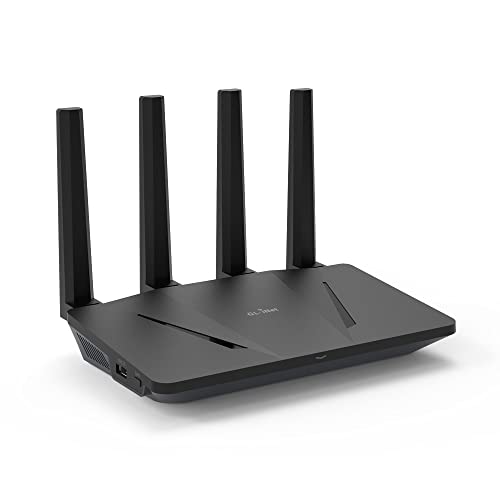 |
GL.iNet Flint Wi-Fi 6 Router | Robust VPN performance | Five Gigabit ports | Handles many devices | View on Amazon | Read Review |
| Massive Coverage Solution |  |
TP-Link BE6500 Wi-Fi 7 Router | Wide signal coverage | Dual 2.5Gbps ports | High-capacity device management | View on Amazon | Read Review |
| Budget-Friendly New Standard |  |
TP-Link Archer BE3600 Wi-Fi 7 Router | Latest Wi-Fi 7 protocol | Multi-gigabit port access | Strong processor performance | View on Amazon | Read Review |
More Details on Our Top Picks
-
GL.iNet Flint 2 Wi-Fi 6 Router
If you want to take full control of your home network, this is your primary candidate. It ships with pre-installed OpenWrt, meaning you avoid the headache of complex flashing procedures right out of the gate.
The dual 2.5G ports provide the speed necessary for high-bandwidth tasks. While the footprint is larger than a typical travel router, its robust processing power handles encrypted traffic like a dream.
- Brand Name:GL.iNet
- Wireless Standard:Wi-Fi 6
- Port Configuration:Dual 2.5G + Gigabit
- Primary Use Case:Advanced home networking
- Additional Feature:Pre-installed OpenWrt firmware
- Additional Feature:Integrated WireGuard VPN client
- Additional Feature:AdGuard Home support
-
GL.iNet Opal Travel Router
This device is the size of a deck of cards, making it the perfect companion for frequent travelers. It manages to pack OpenWrt functionality into a tiny frame, ensuring you keep your privacy while relying on hotel or coffee shop Wi-Fi.
Don't expect it to serve a massive household, as it focuses on portability and VPN security for one or two users. It is an ideal tool to bring your own secure network environment with you.
- Brand Name:GL.iNet
- Wireless Standard:AC1200
- Port Configuration:3 Gigabit ports
- Primary Use Case:Secure travel connectivity
- Additional Feature:Supports 30+ VPN providers
- Additional Feature:Ultra-lightweight 145g build
- Additional Feature:Dual-band Wi-Fi capability
-
Banana Pi OpenWrt One Router
This board is built specifically for those who love to tinker with the underlying architecture of their router. By offering mainline OpenWrt support, it provides a clean, upstream experience that enthusiasts usually spend hours chasing.
It is not a plug-and-play appliance for the average consumer. Instead, it serves as a development platform for people who want to customize every aspect of their routing environment.
- Brand Name:youyeetoo
- Wireless Standard:Wi-Fi 6
- Processor Type:MediaTek MT7981B
- Memory Capacity:1GB DDR4
- Primary Use Case:Custom firmware development
- Additional Feature:Open hardware design
- Additional Feature:Dedicated RJ45 connectivity
- Additional Feature:High-performance memory
-
GL.iNet Beryl AX Travel Router
The Beryl AX bridges the gap between a pocket-sized device and a serious performance machine. It features a 2.5G WAN port, which is a rare and welcome addition for a travel-focused router.
You will find it handles Wi-Fi 6 speeds efficiently, offering enough overhead for demanding tasks like streaming or remote work. It is essentially a high-performance engine squeezed into a compact chassis.
- Brand Name:GL.iNet
- Wireless Standard:Wi-Fi 6
- Port Configuration:2.5G WAN + Gigabit LAN
- Primary Use Case:Secure remote work
- Additional Feature:USB 3.0 file sharing
- Additional Feature:Dedicated VPN toggle
- Additional Feature:Dual-band wireless radios
-
Cudy AX3000 Wi-Fi 6 Router
Cudy offers a no-nonsense approach for users who want to improve their home coverage without complex setups. It delivers AX3000 speeds, providing enough bandwidth for the typical connected household.
The hardware is compatible with mesh networking, allowing you to expand your coverage if your home has dead zones. It is a solid, standard choice that avoids unnecessary feature bloat.
- Brand Name:Cudy
- Wireless Standard:Wi-Fi 6
- Port Configuration:4 Gigabit Ethernet
- Primary Use Case:Home mesh coverage
- Additional Feature:Dedicated mobile app control
- Additional Feature:Scalable mesh system
- Additional Feature:High-speed data throughput
-
GL.iNet Flint 3 Wi-Fi 7 Router
Stepping into the world of Wi-Fi 7, this router is designed for maximum throughput and low latency. With its tri-band architecture, it effectively manages traffic across crowded home environments.
It includes five 2.5G ports, making it a dream for a wired setup. This is for the user who wants gigabit-plus speeds and wants to be ready for the next decade of wireless technology.
- Brand Name:GL.iNet
- Wireless Standard:Wi-Fi 7
- Port Configuration:5 x 2.5G ports
- Primary Use Case:High-demand gaming and streaming
- Additional Feature:6GHz band support
- Additional Feature:Tri-band wireless optimization
- Additional Feature:Advanced VPN routing
-
TP-Link ER605 Wired VPN Router
This is a dedicated piece of networking gear that strips away the wireless radio to focus purely on routing. It is built for stable wired connections, offering multiple WAN ports for load balancing.
It is a steady workhorse for small offices that need a hardened firewall and consistent uptime. While it lacks Wi-Fi, it allows you to pair it with dedicated access points for a more modular network.
- Brand Name:TP-Link
- Port Configuration:3 WAN + 1 USB
- Primary Use Case:Wired office networking
- Additional Feature:Omada SDN integration
- Additional Feature:Lightning protection
- Additional Feature:Secure VPN termination
-
GL.iNet Flint Wi-Fi 6 Router
The original Flint remains a sensible choice for those who need a balance of wired capacity and Wi-Fi 6 performance. It offers enough throughput to handle high-speed encrypted connections through WireGuard or OpenVPN.
You can reliably connect up to 120 devices, which is plenty for even the busiest smart home. It performs like a steady anchor, providing consistent coverage without the need for constant adjustment.
- Brand Name:GL.iNet
- Wireless Standard:Wi-Fi 6
- Port Configuration:5 x 1G ports
- Primary Use Case:Home VPN routing
- Additional Feature:Integrated AdGuard Home
- Additional Feature:Easy setup interface
- Additional Feature:WPA3 security support
-
TP-Link BE6500 Wi-Fi 7 Router
If you need to blanket a large home in high-speed wireless, this unit is a strong contender. It utilizes dual 2.5Gbps ports to ensure your wired backhaul isn't a bottleneck for the wireless radio.
The quad-core processor keeps the system responsive even when you have dozens of IoT devices competing for airtime. It is designed to be the central nervous system of your smart home.
- Brand Name:TP-Link
- Wireless Standard:Wi-Fi 7
- Port Configuration:Dual 2.5G ports
- Primary Use Case:Large home coverage
- Additional Feature:Private IoT network support
- Additional Feature:HomeShield security suite
- Additional Feature:USB 3.0 port
-
TP-Link Archer BE3600 Wi-Fi 7 Router
This router brings the advantages of Wi-Fi 7 to a more accessible level. It features a 2.0 GHz quad-core processor, which provides snappy performance for general tasks and complex routing.
You get a solid mix of 2.5G and 1G ports, giving you the flexibility to prioritize your most critical wired devices. It is a balanced machine for someone wanting the latest wireless standard without unnecessary complexity.
- Brand Name:TP-Link
- Wireless Standard:Wi-Fi 7
- Port Configuration:2 x 2.5G + 3 x 1G
- Processor Type:2.0 GHz Quad Core
- Primary Use Case:General high-speed home use
- Additional Feature:EasyMesh support
- Additional Feature:MLO technology
- Additional Feature:Private IoT network isolation
Frequently Asked Questions
Is it difficult to install OpenWrt on a new router?
The process usually involves uploading a firmware file through the manufacturer's web interface. While it is straightforward, you must choose the exact firmware image that matches your specific hardware revision. A single mistake here can turn your expensive router into a plastic paperweight.
Will installing OpenWrt void my warranty?
Most manufacturers consider third-party firmware a violation of their terms. You are essentially replacing the factory operating system with your own. Keep in mind that you will likely be on your own for technical support once you make the switch.
Can I still use my router as a normal Wi-Fi access point?
Yes, OpenWrt functions as a powerful router and access point. You will have to configure the wireless settings manually through the web interface after the initial setup. The interface provides granular control over signal strength, channels, and security protocols.
What are the main security benefits of using OpenWrt?
You get full control over your network traffic without hidden backdoors or data-tracking software. It allows you to run modern encryption protocols and set up robust firewalls that standard home routers often lack. You essentially own the software stack from top to bottom.
Should I buy a used router to run OpenWrt?
Buying used is a smart strategy to save money and reduce electronic waste. Many older enterprise-grade devices work better than modern consumer units. Just make sure the model is still actively supported by the current version of the software.