


You likely think you need a massive, heavy tube head to capture a great tone. In reality, modern digital processing and precise analog circuitry have rendered those back-breaking stacks largely optional for the gigging player.
The Best Amp Simulator Pedals now offer studio-grade fidelity in a package that fits easily into a backpack. Selecting the right unit requires understanding your specific signal chain needs, so let's compare the leading contenders.
Key Takeaways
- Prioritize units with dedicated impulse response loading if you demand authentic cabinet textures.
- Check for balanced XLR outputs if you intend to send a signal directly to a mixing console.
- Confirm whether the pedal uses analog circuitry or digital modeling to match your tonal preferences.
- Evaluate the physical footprint to ensure it fits alongside your existing effects collection.
- Look for built-in effects loops if you plan to integrate external modulation or time-based stompboxes.
| Professional Analog Foundation | 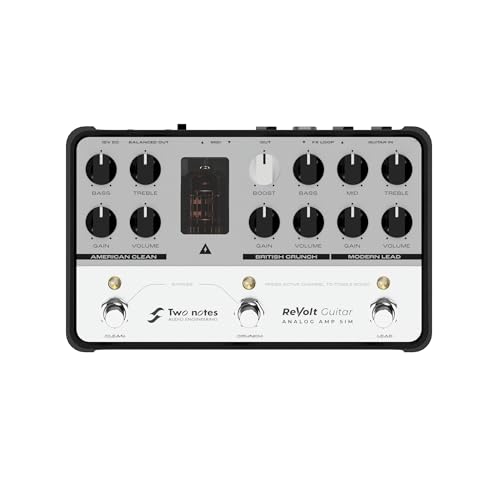 |
Two Notes ReVolt All-Analog Simulator | Genuine tube warmth | Three versatile channels | Analog signal path | View on Amazon | Read Review |
| Budget Tone King | 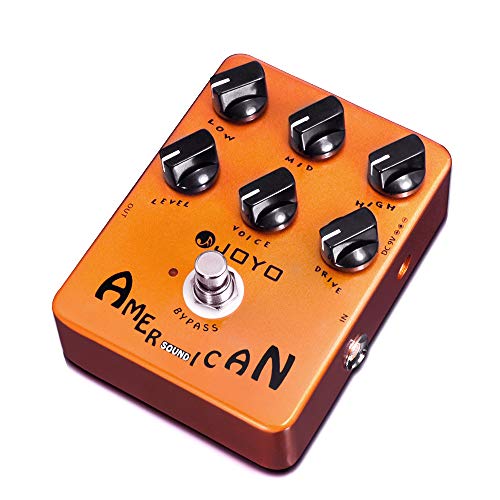 |
JOYO American Sound Tube Simulator | Affordable price point | Intuitive knob layout | Classic amp voicing | View on Amazon | Read Review |
| Reliable Practice Essential |  |
GOKKO GK-33 American Amp Simulator | Responsive overdrive textures | Flexible voice control | Sturdy aluminum frame | View on Amazon | Read Review |
| Versatile Studio Engine |  |
BOSS IR-2 Amp Cabinet Loader | High-quality IR technology | Eleven distinct amp types | Easy computer connectivity | View on Amazon | Read Review |
| Simple Signal Solver |  |
Generic All-Analog Speaker Simulator | Minimalist design | Low signal noise | Durable construction | View on Amazon | Read Review |
| Entry Level Workhorse |  |
LEKATO Amp Simulator Pedal | Responsive gain structure | Solid metal construction | True bypass circuitry | View on Amazon | Read Review |
| Modern Visual Interface |  |
NUX Amp Core Studio Pedal | Clear color display | Multiple scene modes | High-quality IR support | View on Amazon | Read Review |
| Industry Standard Benchmark |  |
Strymon Iridium Amp Simulator | Exceptional sonic realism | Simple, familiar controls | Compact footprint | View on Amazon | Read Review |
| Ultimate Tonal Laboratory |  |
JOYO Preamp House Simulator | Wide variety of models | Integrated XLR output | Effects loop included | View on Amazon | Read Review |
| Characterful Analog Texture |  |
EarthQuaker Easy Listening Simulator | Distinctive analog flavor | Simple to operate | High build quality | View on Amazon | Read Review |
More Details on Our Top Picks
-
Two Notes ReVolt All-Analog Simulator
If you want the soul of a tube amp without the heavy lifting, this is your primary choice. It uses a genuine 12AX7 tube to generate authentic warmth and harmonic richness that digital models often struggle to replicate.
The unit functions as a three-channel powerhouse, moving from pristine clean to high-gain aggression with ease. While it occupies a larger footprint on your board, the sheer sonic depth and feel make it a justified addition for serious players.
- Brand Name:Two Notes
- Circuit Type:All-analog with 12AX7 tube
- Cabinet Simulation:Integrated analog cab sim
- Connection Ports:XLR and 1/4 inch outputs
- Power Requirement:12V DC
- Additional Feature:MIDI control compatible
- Additional Feature:Built-in effects loop
- Additional Feature:Dedicated headphone output
-
JOYO American Sound Tube Simulator
You get a surprising amount of classic California grit for a small investment. This pedal captures the mid-range response and chime of vintage amplifiers, making it a favorite for players who need an affordable backup rig.
Dialing in your sound is straightforward thanks to the six-knob interface. While the chassis feels utilitarian, the reliability of the tone remains its biggest asset for gigging musicians on a strict budget.
- Brand Name:JOYO
- Circuit Type:Analog simulation
- Control Layout:Six-knob EQ and gain
- Cabinet Simulation:Integrated cab sim
- Connection Ports:1/4 inch input and output
- Power Requirement:9V DC
- Additional Feature:True bypass switching
- Additional Feature:Rugged metal housing
- Additional Feature:Compact pedalboard size
-
GOKKO GK-33 American Amp Simulator
This pedal focuses on the essential "edge-of-breakup" tones that define American rock music. The Voice control acts like a telescope, allowing you to zoom in on specific frequencies to match the response of your favorite vintage speakers.
It is a straightforward tool for anyone who wants a consistent sound regardless of what house amplifier you are forced to use. It lacks the advanced digital features of modern IR loaders, but it wins on simplicity and tactile feedback.
- Brand Name:GOKKO
- Circuit Type:All-analog
- Control Layout:Three-band EQ and voice
- Connection Ports:1/4 inch jack
- Power Requirement:9V DC
- Additional Feature:Three-band EQ section
- Additional Feature:Compact footprint
- Additional Feature:Analog-style clipping
-
BOSS IR-2 Amp Cabinet Loader
This pedal packs a massive library of sounds into a standard stompbox size. By utilizing Celestion Digital IRs, it offers an incredibly realistic representation of how speakers move air.
You will appreciate the USB-C connectivity for recording directly into your computer, which turns this pedal into a complete mobile interface. The sheer number of eleven unique amp models provides enough variety to cover any musical genre.
- Brand Name:BOSS
- Circuit Type:Digital modeling
- Cabinet Simulation:Celestion Digital IRs
- Connection Ports:USB-C and 1/4 inch
- Power Requirement:9V DC
- Additional Feature:Stereo output jacks
- Additional Feature:Ambience effect control
- Additional Feature:Headphone jack input
-
Generic All-Analog Speaker Simulator
When you need a no-frills way to convert your signal for a direct line, this pedal delivers. It acts like a functional bridge between your pedalboard and a soundboard, smoothing out the harsh highs that usually plague direct connections.
It does not offer fancy digital bells or whistles, but it provides a warm, natural response that is easy to manage. If you are someone who hates menu diving, this analog simplicity is a refreshing change of pace.
- Brand Name:Unbranded/Generic
- Circuit Type:All-analog
- Power Requirement:9V DC
- Additional Feature:Compact form factor
- Additional Feature:Direct injection capability
- Additional Feature:Simple bypass switch
-
LEKATO Amp Simulator Pedal
This unit provides a solid way to experiment with different gain stages without breaking the bank. It excels at transitioning from clean to overdrive with a turn of the gain knob, offering a lot of dynamic range for its price.
The build is designed for heavy touring, featuring a robust metal casing that resists common stage wear. While it lacks deep customization, it serves as a dependable foundation for your core tone.
- Brand Name:LEKATO
- Circuit Type:Analog simulation
- Control Layout:Simple gain and tone
- Connection Ports:1/4 inch jacks
- Power Requirement:9V DC
- Additional Feature:Compact design
- Additional Feature:LED status indicator
- Additional Feature:Low noise floor
-
NUX Amp Core Studio Pedal
The high-definition color LCD screen makes this pedal feel like a miniature computer for your guitar rig. You can easily visualize your signal chain and adjust IR settings, which is a massive upgrade over fiddling with hidden knobs.
It offers three distinct scene modes, allowing you to switch between configurations instantly during a set. The pedal manages to be feature-dense without being overwhelming for the average user.
- Brand Name:NUX
- Circuit Type:Digital modeling
- Cabinet Simulation:IR cabinet loader
- Connection Ports:USB and 1/4 inch
- Power Requirement:9V DC
- Additional Feature:Headphone output
- Additional Feature:Firmware update capability
- Additional Feature:Stereo input and output
-
Strymon Iridium Amp Simulator
There is a reason you see this pedal on so many professional boards. It captures the intricate character of tube amplifiers through advanced IR technology, giving you the feeling of playing through a real, pushed stack.
The interface is intuitive and musician-focused, meaning you spend less time tweaking parameters and more time playing. It is the gold standard for those who demand uncompromising sound quality in a pedalboard-friendly enclosure.
- Brand Name:Strymon
- Circuit Type:Digital modeling
- Cabinet Simulation:Integrated IR loader
- Connection Ports:Stereo 1/4 inch jacks
- Power Requirement:9V DC
- Additional Feature:Headphone jack
- Additional Feature:Room ambience settings
- Additional Feature:Favorite preset switch
-
JOYO Preamp House Simulator
If you suffer from decision paralysis, look away, because this pedal offers an incredible nine amp models. It acts as a full-featured hub for your rig, complete with an XLR output for direct connection to a PA system.
The dual-channel setup allows you to switch between a clean rhythm tone and a dirty lead sound seamlessly. It is essentially a complete recording studio packed into a single, durable box.
- Brand Name:JOYO
- Circuit Type:Digital/Analog hybrid
- Cabinet Simulation:IR loading
- Connection Ports:XLR, FX loop, 1/4 inch
- Power Requirement:9V DC
- Additional Feature:18 total tones
- Additional Feature:IR loader capability
- Additional Feature:Dedicated output switch
-
EarthQuaker Easy Listening Simulator
This pedal is for the player who values distinct character over sterile perfection. It provides a unique, analog-voiced coloration that makes your guitar sound like it is being recorded through a vintage console.
It is a specialized tool that excels at adding studio-grade polish to your signal. You will find it most useful if you already have a primary amp but want a way to record direct without losing your personality.
- Brand Name:EarthQuaker Devices
- Circuit Type:Analog simulation
- Connection Ports:1/4 inch jacks
- Power Requirement:9V DC
- Additional Feature:Compact pedal enclosure
- Additional Feature:Hand-built quality
- Additional Feature:Unique tonal voicing
Frequently Asked Questions
Can I use an amp simulator pedal directly into an amplifier?
Yes, but you should typically bypass the pedal's cabinet simulation feature. Sending a speaker-emulated signal into a real guitar speaker will sound muffled and lifeless. Think of it like playing a recording through a thick blanket. Turn off the IRs or cab sims to let your real amplifier handle the final tone shaping.
Do I need a computer to operate these pedals?
Most modern pedals function perfectly as standalone units once they are programmed. You only need a computer if you want to manage IR files or perform deep firmware updates. For live performance, you can leave the laptop at home. The onboard controls are designed to handle your sound adjustments on the fly.
Will these pedals replace my tube amp?
They provide a highly convincing alternative for recording and direct-to-PA applications. Many players find the consistency of digital tone far easier to manage than maintaining aging vacuum tubes. However, if you crave the specific tactile response of a physical speaker moving air, a digital pedal might feel slightly different under your fingers. It is a matter of preference rather than absolute quality.
Can I use distortion pedals before the amp simulator?
Absolutely, and in many cases, you should. Most amp simulators are designed to respond to pedalboard gain just like a traditional tube amplifier would. Treat the simulator as the heart of your rig. Place your fuzz, overdrive, and distortion pedals in front of the unit for the most natural results.
Are these pedals expensive to maintain?
They are essentially solid-state computers, so they do not require tube changes or bias adjustments. This makes them remarkably reliable over the long term. Keep the firmware updated and protect the input jacks from physical stress. Beyond that, they are designed to perform reliably for years without any specialized service.