
Many people assume that passing your boards is merely about memorizing textbooks. In reality, the Best Ot Programs require a mix of high-level theory and immediate, clinical application that you can actually carry in your pocket.
You need tools that translate academic pressure into practical confidence. Let’s compare the resources that help you bridge the gap between passing an exam and mastering your first day on the job.
Key Takeaways
- Prioritize materials that offer specific practice questions mapped to the current exam blueprints.
- Seek out pocket-sized references that use durable materials like PVC to survive high-pressure hospital shifts.
- Focus on resources that provide clear rationale and explanations rather than just an answer key.
- Check that your study guides distinguish between adult and pediatric populations to ensure your clinical focus remains sharp.
- Choose content that includes acute care protocols if your career goals lean toward hospital-based rehabilitation settings.
| Ultimate Certification Preparation |  |
OT Exam Prepper Study Guide | Focused exam strategies | High-yield content review | Logical study progression | View on Amazon | Read Review |
| Essential Clinical Documentation |  |
The OTA’s Guide to Documentation | Clear charting templates | Legal compliance focus | Practical daily examples | View on Amazon | Read Review |
| Portable Clinical Companion |  |
OT Pocket Reference Guide | Extremely portable size | Quick clinical reminders | Durable for daily use | View on Amazon | Read Review |
| Comprehensive Knowledge Review |  |
Occupational Therapy Examination Review Guide | Thorough subject coverage | Academic structure | Reliable reference material | View on Amazon | Read Review |
| Practice Question Heavyweight |  |
NBCOT-COTA Exam Prep 2026-2027 | Large question bank | Detailed answer rationales | Up-to-date content | View on Amazon | Read Review |
| Versatile Clinical Toolkit |  |
OT Quick Reference Cards Bundle | Pediatric and adult coverage | High durability | Easy to organize | View on Amazon | Read Review |
| Concise Practice Manual |  |
Quick Reference to Occupational Therapy | Direct and concise | Broad condition coverage | Fast information retrieval | View on Amazon | Read Review |
| Essential Pediatric Aid | 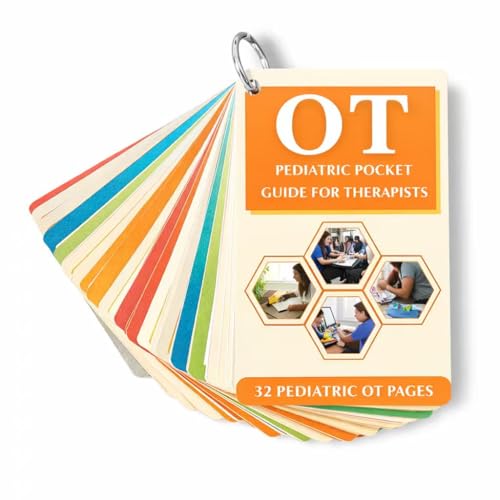 |
Pediatric Occupational Therapy Reference Cards | Durable PVC material | Pediatric focus | Easy to disinfect | View on Amazon | Read Review |
| Hospital Setting Specialist |  |
Acute Care Occupational Therapy Guide | Hospital-specific strategies | Interdisciplinary approach | Functional recovery focus | View on Amazon | Read Review |
| Standardized Certification Review |  |
National OTA Certification Study Guide | Aligns with certification standards | Clear core competencies | Focused study structure | View on Amazon | Read Review |
More Details on Our Top Picks
-
OT Exam Prepper Study Guide
Success on the NBCOT board exam requires more than just memorization. This guide functions as a structured roadmap for your final months of review. It provides the conceptual clarity needed to connect complex clinical theories to actual patient scenarios.
If you struggle with the sheer volume of information on the test, this resource helps you prioritize. It distills dense academic topics into actionable study patterns. Note that this guide is dense, so you should pair it with active practice tests to truly gauge your readiness.
- Primary Content:NBCOT Exam prep
- Format Type:Printed study guide
- Target Population:OT students
- Additional Feature:Structured review modules
- Additional Feature:Clinical reasoning focus
- Additional Feature:Exam success strategies
-
The OTA’s Guide to Documentation
Documentation is often the most tedious part of a practitioner's day. This book acts as a reliable anchor for OTA students and new clinicians who find medical charting overwhelming. It clarifies how to write notes that satisfy both legal requirements and insurance standards.
You will find clear templates that simplify the process of recording patient progress. It moves beyond theory to show exactly what a defensible daily note looks like in a real clinic. The text assumes some familiarity with medical terminology, so brush up on those basics first.
- Primary Content:Clinical documentation
- Format Type:Instructional guide
- Target Population:OTA professionals
- Additional Feature:Standardized note formats
- Additional Feature:Insurance compliance tips
- Additional Feature:Coding guidance
-
OT Pocket Reference Guide
You rarely have time to flip through heavy textbooks while on the floor. This pocket guide serves as a lightweight cheat sheet for quick lookups during fieldwork or hospital rotations. It packs essential assessment tips and treatment reminders into a compact, carry-everywhere size.
The content is brief by design, making it perfect for those high-pressure moments in a clinic. It is not meant for deep study or theory, but rather as a quick-reference tool when your memory hits a temporary wall. Keep it in your lab coat for immediate access.
- Primary Content:Quick reference
- Format Type:Pocket guide
- Page Count:32 pages
- Target Population:OT students and clinicians
- Additional Feature:3×5 compact dimensions
- Additional Feature:Rehab-focused tips
- Additional Feature:Durable laminated surface
-
Occupational Therapy Examination Review Guide
This guide offers a rigorous overview of the core domains tested in the national exam. It is built for students who need a systematic review of the entire scope of practice. The content is organized to help you identify knowledge gaps before they become liabilities on test day.
The writing is dense, reflecting the complexity of the subject matter. It is a workhorse of a book, best suited for students who prefer a traditional textbook approach to their preparation. You will want to supplement this with other resources if you prefer visual aids or interactive diagrams.
- Primary Content:Exam review
- Format Type:Textbook
- Target Population:OT students
- Additional Feature:Broad domain coverage
- Additional Feature:Clinical scope assessment
- Additional Feature:Standardized test prep
-
NBCOT-COTA Exam Prep 2026-2027
Active recall is the fastest way to solidify your knowledge. With 750 practice questions, this book forces you to apply your knowledge to realistic scenarios repeatedly. Each answer explanation breaks down the clinical reasoning behind the correct choice, which is just as important as the answer itself.
This is a high-volume tool for those who learn best through repetition. Because it includes a comprehensive content review, it serves as a stand-alone preparation kit. Just ensure you dedicate enough time to review the explanations even when you answer correctly, as that is where the real growth happens.
- Primary Content:Practice questions
- Format Type:Review guide
- Target Population:COTA candidates
- Included Questions:750
- Additional Feature:Detailed content review
- Additional Feature:Scenario-based questions
- Additional Feature:Rationales provided
-
OT Quick Reference Cards Bundle
Fieldwork demands versatility, and this bundle covers both pediatric and adult settings. These cards act as a visual bridge between your classroom knowledge and the messy reality of patient care. They are durable enough to survive a busy clinical environment without showing significant wear.
The cards are best used for quick verification of milestones or reflex assessments. Since they are loose cards rather than a bound book, they are easy to organize by setting. Use them to streamline your workflow during fast-paced clinical shifts.
- Primary Content:Reference cards
- Format Type:74-page bundle
- Target Population:Students and therapists
- Additional Feature:Fieldwork-ready format
- Additional Feature:Pediatric milestones included
- Additional Feature:Quick assessment guides
-
Quick Reference to Occupational Therapy
This manual is the Swiss Army knife of your library. It provides distilled information that helps you manage various patient conditions efficiently. It is designed to be read in short bursts, making it ideal for those who have limited study time or need an immediate refresher.
The focus is on utility and speed of access. It avoids unnecessary filler, sticking strictly to the information you need to perform clinical tasks safely. It is a great companion to keep on your desk for daily reference.
- Primary Content:Clinical reference
- Format Type:Manual
- Target Population:OT professionals
- Additional Feature:Rapid lookup format
- Additional Feature:Condition-specific guidance
- Additional Feature:Practical application tips
-
Pediatric Occupational Therapy Reference Cards
Pediatric OT requires quick recall of reflexes and developmental milestones. These PVC cards are a resilient tool designed specifically for the chaos of a pediatric clinic. They keep vital information right at your fingertips when you are working with active, moving children.
The material quality is a standout feature, as it resists spills and frequent handling. It is an excellent resource for students who feel nervous about their pediatric fieldwork rotations. These cards turn anxiety into confidence by providing a reliable, sturdy reference.
- Primary Content:Pediatric reference
- Format Type:Reference cards
- Target Population:Pediatric therapists
- Material Quality:PVC
- Additional Feature:Reflex charts included
- Additional Feature:Development milestones
- Additional Feature:Condition summaries
-
Acute Care Occupational Therapy Guide
Acute care is a fast-paced environment where clinical decisions happen in seconds. This guide helps you navigate the specific demands of hospital-based care, including early mobilization and interdisciplinary coordination. It is a masterclass in functional recovery strategies for the most fragile patients.
The book is best for therapists transitioning into a hospital role who need to understand their unique function in a medical team. It is highly specialized, so it might not be the right choice if your focus is community-based or outpatient pediatrics.
- Primary Content:Acute care
- Format Type:Clinical guide
- Target Population:Hospital-based therapists
- Additional Feature:Early mobilization tips
- Additional Feature:Assessment strategies
- Additional Feature:Team communication focus
-
National OTA Certification Study Guide
This guide provides a structured approach to passing the national certification exam. It covers the core competencies required for practice, ensuring you don't miss any critical topics. It functions as a solid foundation for your study sessions.
The content is straightforward and avoids unnecessary academic fluff. It is an excellent choice for students who need a no-nonsense review that aligns directly with certification standards. Pair this with a dedicated bank of practice exams to get the most out of it.
- Primary Content:Exam review
- Format Type:Study guide
- Target Population:OTA candidates
- Additional Feature:Certification-aligned content
- Additional Feature:Core competency focus
- Additional Feature:Study organization tools
Frequently Asked Questions
What is the difference between an OTD and an MOT degree?
An MOT degree focuses primarily on clinical practice and gets you into the workforce faster. An OTD degree adds extra training in leadership, advocacy, and research. Both paths qualify you to take the national exam, so choose based on whether you want a clinical focus or a leadership career trajectory.
How long does it take to finish an occupational therapy program?
Most MOT programs take about two years of full-time study. OTD programs typically require an additional year, bringing the total to three years. You should also account for the time needed to prepare for your certification exams after graduation.
Do I need a specific undergraduate degree to apply?
You do not need a degree in occupational therapy, but you must complete specific prerequisite courses. Most programs require credits in anatomy, physiology, and psychology. Check the specific requirements for every school on your list, as these prerequisites can vary slightly.
Are online occupational therapy programs respected by employers?
Employers prioritize your accreditation status and your clinical performance over the delivery method of your classes. An online degree from an accredited program is viewed exactly the same as a traditional one. The key is ensuring the program provides enough in-person lab time to meet industry standards.
What is the most important factor when choosing a school?
The graduation rate and the NBCOT exam pass rate are the most reliable indicators of program quality. These numbers tell you how well the school supports its students through the most difficult hurdles. High pass rates act like a lighthouse, guiding you toward a program that knows how to prepare its students for the real world.