

Most people assume that running a smart home requires a massive server rack tucked away in a basement closet. In reality, your entire digital life can run on a device no larger than a stack of coasters.
Finding the Best Mini Pc for Home Assistant is less about raw power and more about finding a machine that stays awake for years without complaint. You want a silent partner that manages your sensors and lights while you sleep. Here are the top performers for your smart home project.
Key Takeaways
- Prioritize energy efficiency since your home automation controller must run twenty-four hours a day.
- Choose a processor with at least four physical cores to ensure your dashboard remains responsive during heavy automation tasks.
- Verify that your unit includes at least 8GB of RAM to accommodate future add-ons and integrations.
- Always opt for an SSD over a mechanical drive because Home Assistant writes data constantly and needs that speed to survive.
- Check that the device includes a 2.5G LAN port if you plan to host high-bandwidth media services alongside your home controls.
| Purpose Built Automation |  |
Pulcro.io TK Node i3 Mini PC | Preinstalled Home Assistant OS | Efficient 12th Gen Intel | Quiet operation | View on Amazon | Read Review |
| Virtualization Powerhouse | |
Pulcro.io TK Node Ryzen Mini PC | Preinstalled Proxmox and Home Assistant | Capable multi-threaded performance | Reliable hardware design | View on Amazon | Read Review |
| Budget Friendly Starter | 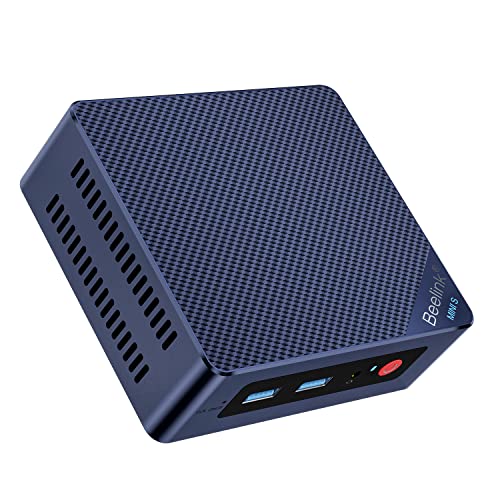 |
Beelink Mini S12 N95 PC | Extremely low power draw | Compact chassis footprint | Fast 2.5G networking | View on Amazon | Read Review |
| High Performance Versatility | KAMRUI Pinova P2 Ryzen PC | Strong Ryzen 7 processing | Triple monitor support | Ample memory capacity | View on Amazon | Read Review | |
| Modern Efficiency Upgrade |  |
Beelink Mini S13 N150 PC | Updated N150 chip | Efficient 16GB RAM | Modern wireless connectivity | View on Amazon | Read Review |
| Reliable Proxmox Host | 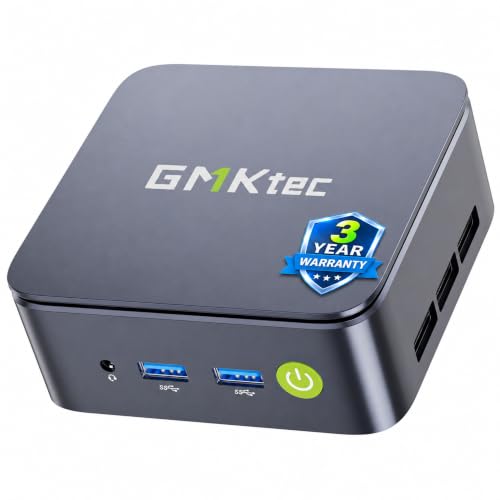 |
GMKtec G10 Ryzen PC | Strong 2.5GbE networking | Capable Ryzen performance | Sturdy desktop construction | View on Amazon | Read Review |
| Fast Memory Speeds |  |
Beelink Mini S13 LPDDR5 PC | Faster LPDDR5 memory | Compact and efficient | High-speed networking | View on Amazon | Read Review |
| Legacy Value Option |  |
Beelink SER3 Ryzen PC | Reliable Vega graphics | Dual HDMI output | Affordable entry point | View on Amazon | Read Review |
| Expandable Server Power |  |
GEEKOM A5 Ryzen PC | Massive RAM upgrade potential | High-performance processor | Ultra-quiet operation | View on Amazon | Read Review |
| Reliable Business Desktop |  |
KAMRUI Pinova P1 PC | Consistent processing speed | Ample memory capacity | Multiple display outputs | View on Amazon | Read Review |
More Details on Our Top Picks
-
Pulcro.io TK Node i3 Mini PC
This is the gold standard for anyone who wants Home Assistant running in minutes rather than hours. Because it arrives with the software preinstalled, you avoid the common pitfalls of flashing drives or configuring BIOS settings.
The Intel i3 1215U processor provides enough headroom to handle dozens of integrations and complex automations without breaking a sweat. If you want a true appliance experience that just works right out of the box, this is your best bet.
- Processor:Intel i3 1215U
- Memory:16GB
- Storage:512GB SSD
- Additional Feature:Ready to use immediately
- Additional Feature:Optimized for automation
- Additional Feature:Compact form factor
-
Pulcro.io TK Node Ryzen Mini PC
If you prefer running Home Assistant inside a Proxmox virtual machine, this unit is built specifically for your workflow. It offers the same convenience as the Intel version but swaps in an AMD Ryzen processor for different processing demands.
This configuration is an excellent choice for users who want to host additional services alongside their home automation stack. It acts as a stable foundation for those who enjoy managing their server environments.
- Processor:AMD Ryzen R2514
- Memory:16GB
- Storage:512GB SSD
- Additional Feature:Ideal for containerization
- Additional Feature:Multi-service hosting support
- Additional Feature:Professional server software included
-
Beelink Mini S12 N95 PC
The Beelink S12 is the entry-level champion for those building their first local smart home controller. It relies on the Intel N95 processor, which is more than sufficient for running Home Assistant and a few lightweight add-ons.
Its low power consumption ensures that it won't impact your electricity bill, even when running 24/7. While it lacks the sheer speed of high-end nodes, it remains a dependable workhorse for standard residential setups.
- Processor:Intel N95
- Memory:8GB
- Storage:480GB SATA SSD
- Networking:2.5G LAN
- Additional Feature:Dual display support
- Additional Feature:Silent cooling system
- Additional Feature:Small desktop profile
-
KAMRUI Pinova P2 Ryzen PC
This unit packs a Ryzen 7330U processor, giving you a significant jump in raw computing power compared to typical budget mini PCs. It is best suited for users who plan to run video-heavy integrations like high-resolution security camera feeds or AI-based image detection.
The generous 16GB of RAM ensures that you won't hit memory bottlenecks when your automation dashboard grows. It is a capable multitasker that handles high-demand workloads with ease.
- Processor:AMD Ryzen 7330U
- Memory:16GB
- Storage:256GB SSD
- Additional Feature:Fast 4.3GHz burst frequency
- Additional Feature:Multi-display connectivity
- Additional Feature:Modern thermal management
-
Beelink Mini S13 N150 PC
Moving to the N150 processor, this Beelink model offers a refined balance of speed and efficiency. It serves as an ideal middle-ground for homeowners who need more than basic controller functions but don't want a loud, bulky tower.
With 16GB of RAM, you have plenty of room to run heavy databases or complex history-tracking add-ons. Its Wi-Fi 6 capability provides a fast, reliable wireless connection if you cannot place your server near an Ethernet port.
- Processor:Intel N150
- Memory:16GB
- Storage:500GB M.2 SSD
- Additional Feature:WiFi 6 integrated
- Additional Feature:USB 3.2 support
- Additional Feature:Dual display ready
-
GMKtec G10 Ryzen PC
The G10 is a solid choice for anyone looking to self-host their home automation software in a professional manner. Featuring the Ryzen 3500U, it manages virtualized environments gracefully without overheating.
The build quality feels sturdy and durable, which is important for a device that stays on year-round. It includes 2.5GbE networking to ensure your local data moves quickly, making it a great choice for a primary home server.
- Processor:AMD Ryzen 3500U
- Memory:16GB
- Storage:512GB SSD
- Networking:2.5GbE LAN
- Additional Feature:Triple 4K output
- Additional Feature:Optimized for Proxmox
- Additional Feature:Bluetooth integrated
-
Beelink Mini S13 LPDDR5 PC
This variation of the S13 uses LPDDR5 memory, which is faster and more efficient than standard RAM options found in similar units. This makes the system feel incredibly responsive when navigating your Home Assistant interface.
The integration of a 2.5G LAN port keeps your connection to smart sensors and switches fast and stable. It is a polished device that prioritizes hardware speed to ensure your automations trigger without delay.
- Processor:Intel N150
- Memory:12GB LPDDR5
- Storage:512GB SSD
- Networking:2.5G LAN
- Additional Feature:Low power operation
- Additional Feature:Dual 4K display output
- Additional Feature:WiFi 6 support
-
Beelink SER3 Ryzen PC
If you are looking to get into home automation on a modest budget, the SER3 offers a reliable path forward. While the Ryzen 3200U is an older chip, it remains perfectly capable of handling standard Home Assistant tasks.
It acts as a solid foundation for a home server that doesn't require extreme computational power. You get a dependable machine that keeps your smart home running, provided you keep your virtualized environments relatively simple.
- Processor:AMD Ryzen 3200U
- Memory:8GB
- Storage:480GB PCIe SSD
- Additional Feature:1000Mbps wired LAN
- Additional Feature:Compact home office design
- Additional Feature:4K display support
-
GEEKOM A5 Ryzen PC
The GEEKOM A5 is designed for those who want a future-proof automation hub. With support for up to 64GB of RAM, you can add as many containers or virtual machines as your project requires.
The Ryzen 7430U provides significant processing headroom, ensuring the system stays quiet even under load. It is a premium option for users who view their Home Assistant server as a long-term investment.
- Processor:AMD Ryzen 7430U
- Memory:16GB
- Storage:512GB SSD
- Additional Feature:8K quad display support
- Additional Feature:Low power consumption
- Additional Feature:Professional build quality
-
KAMRUI Pinova P1 PC
This PC is built for consistent uptime, making it an excellent candidate for a home server that needs to stay online 24/7. The Ryzen R2544 processor offers a balanced performance profile that fits perfectly with the demands of home automation.
Its triple display capability is a nice bonus if you intend to use the machine as a local dashboard controller. It is a workhorse device that trades flashiness for steady, predictable performance.
- Processor:AMD Ryzen R2544
- Memory:16GB
- Storage:256GB M.2 SSD
- Additional Feature:Gigabit Ethernet port
- Additional Feature:WiFi connectivity
- Additional Feature:Sturdy office-grade chassis
Frequently Asked Questions
Do I need a powerful dedicated graphics card?
No, you do not need a GPU for Home Assistant. Most mini PCs rely on integrated graphics, which are more than enough to render the web interface. You only need extra graphical power if you plan to repurpose the PC as a media server for 4K video transcoding.
Is a refurbished office PC better than a new mini PC?
Refurbished models like the Dell OptiPlex Micro or Lenovo Tiny series offer excellent value for the price. They are built for business environments, meaning they are durable and easy to repair. However, a new mini PC often provides a smaller footprint and better power efficiency.
Can I run other software alongside Home Assistant?
Yes, you can use virtualization software like Proxmox to run multiple operating systems on one machine. This allows you to host Home Assistant in one container while keeping your file storage or ad-blocking software separate. Just make sure you have enough CPU cores to handle the additional load.
Will this device work if my internet goes down?
Your local automations will continue to function perfectly without an internet connection. Home Assistant prioritizes local control, meaning your light switches and sensors communicate directly with the server. You only lose external access and cloud-based voice integrations during an outage.
How do I back up my data on a mini PC?
Use the built-in Home Assistant backup tools to create compressed snapshots of your configuration. You should schedule these to upload to a remote cloud service or a network-attached storage device. Having a copy of your settings ensures you can recover quickly if your SSD ever fails.